
Home › Parcel delivery in a car · Updated
Parcel delivery in a carCompare parcel delivery car insurance for multi-drop rounds
Delivering parcels from your car for a network or your own clients means stop-start driving, a full boot and goods that belong to someone else. Courier Insure helps you find specialist brokers who arrange cover built for that kind of round.
Get started- Free to use
- No obligation to buy
- Network and direct-client rounds
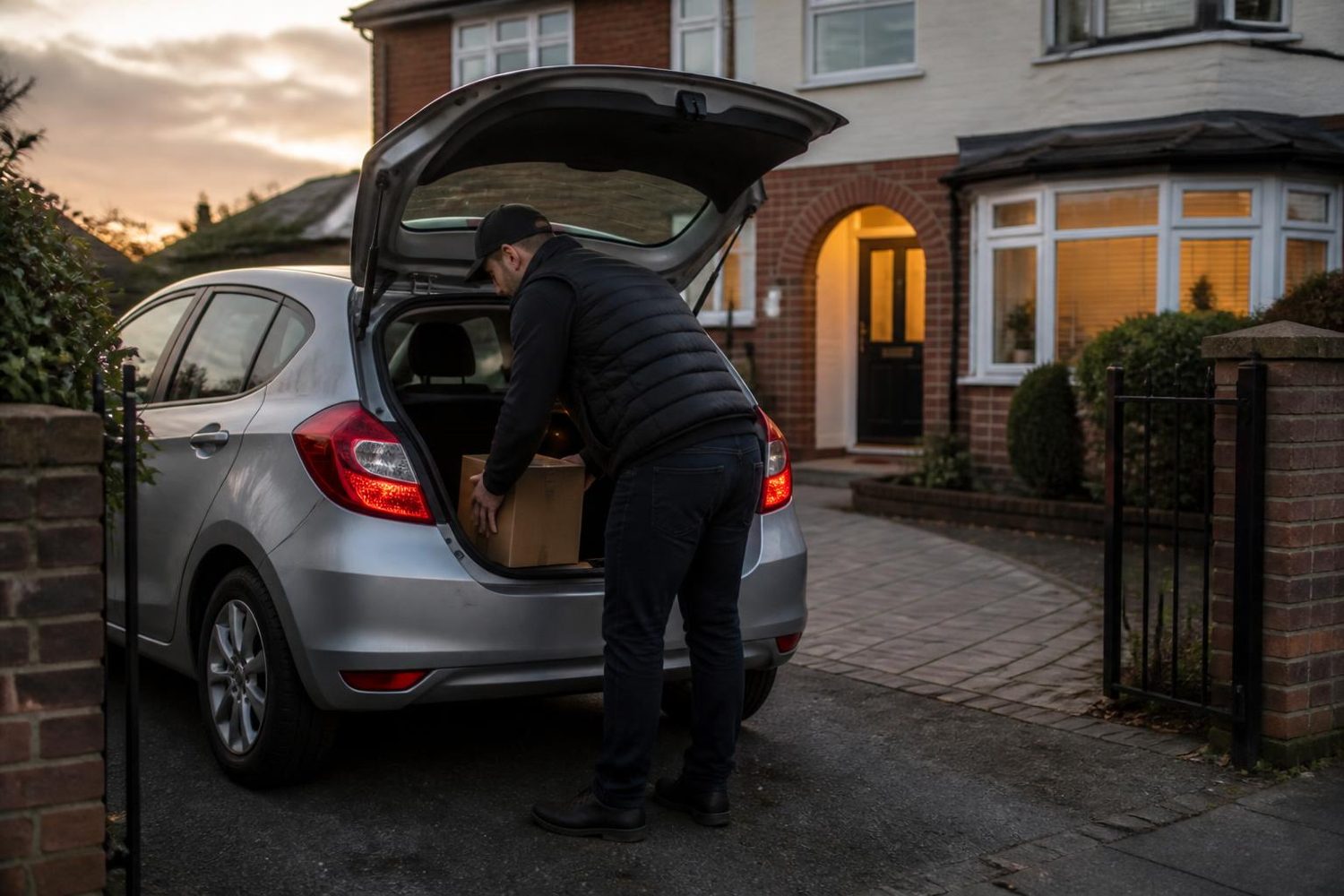
Parcel delivery car insurance is car cover that includes hire and reward or courier use, so you are insured while carrying parcels for payment. Insurers rate parcel rounds on how many drops you make, where you deliver and how the car is left between stops. Cover for the parcels themselves is usually a separate goods in transit policy.
- Specialist brokersCourier insurance brokers who arrange hire and reward cover every day.
- One short formTell us about the vehicle, the work and the drivers once.
- No obligationCompare the options you are offered and decide in your own time.
At a glance
- Parcel rounds in a car are usually treated as courier or hire and reward use, not business use.
- Insurers ask about the number of drops, the area covered and how the car is secured at each stop.
- A packed boot and parcels on the seats can affect theft risk and unattended-vehicle conditions.
- Peak season often brings extra shifts, more miles and sometimes a second network to work for.
- Working for a network and for direct clients at the same time may change what the insurer needs to know.
- Goods in transit covers the parcels; the motor policy covers the car and other road users.
A car parcel round looks very different to everyday driving
A typical round involves collecting from a depot, loading the boot and back seats, then making dozens of short stops on residential streets. You are getting in and out of the car constantly, reversing into tight spots and often driving at the busiest times of day.
Insurers price that pattern differently from a car that does a daily commute. Short hops, frequent parking and time spent away from the car all raise the chance of a minor bump or a theft from the vehicle. That is why parcel work needs courier or hire and reward use on the policy rather than standard cover.
Boot space, loading and keeping parcels out of sight
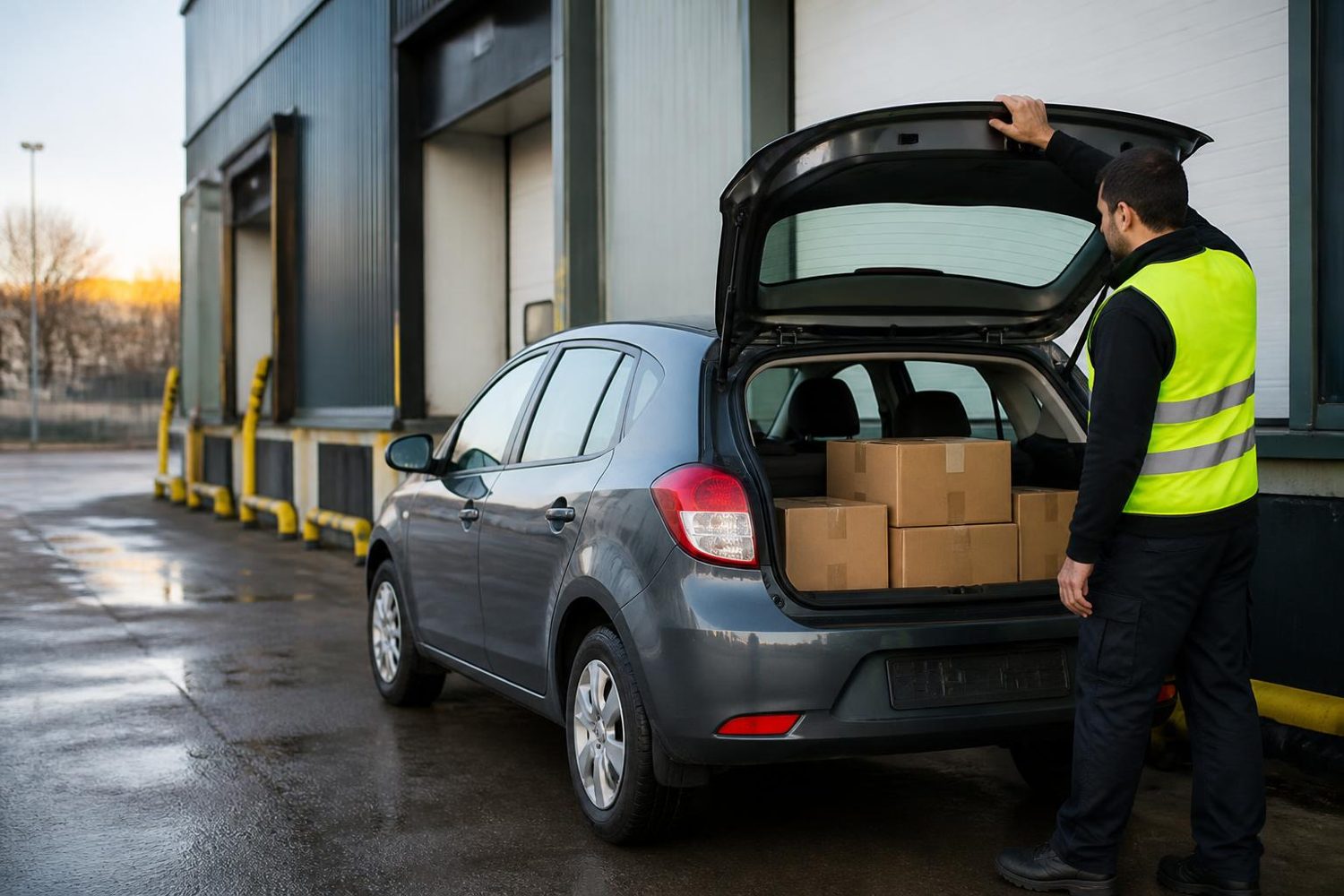
Cars are not built to carry a day's worth of parcels, so most drivers fill the boot, the back seats and sometimes the front passenger footwell. How the load is stored matters for safety and for insurance.
Many policies have conditions about leaving the car unlocked or with keys inside, even for a quick doorstep drop. Some goods in transit policies only pay out for theft if the goods were out of sight and the car was locked. These conditions are easy to break on a busy round, so it is worth reading them before the first shift.
Points worth checking about the load:
- Whether parcels on the back seat count as secured or visible
- Any rule about keys left in the ignition while you are at the door
- Limits on the value of any single parcel
- Excluded items such as phones, jewellery, tobacco or alcohol
Working for a delivery network versus your own clients
Some drivers take routes from a parcel network or delivery app, while others build up direct work with local shops, online sellers or small firms. Plenty do both. Each arrangement can bring different requirements.
Networks and apps often set out the level of cover they expect in their own terms, and these can change, so checking the current contract or app is worthwhile. Direct clients may ask for proof of goods in transit or public liability before handing over stock.
Network rounds
The insurer may ask which network you work for and how many drops a round involves. Some networks ask to see your certificate before you start.
Direct clients
Regular work for local businesses can mean higher-value items and repeat collections. Telling the insurer about this work helps make sure the policy reflects it.
Peak season, extra shifts and a second network
The run-up to Christmas and big sale events brings more routes, longer days and sometimes work from a second network. Mileage climbs fast, and drivers who normally deliver part-time can end up working most days.
If your mileage or working pattern changes, it is worth telling your insurer or broker. A mileage limit set for quieter months can be exceeded in a few busy weeks, and some insurers ask to be told about any new delivery company you work for.
- Check the mileage limit before peak season starts
- Tell the insurer if you add a new network or client
- Confirm whether anyone helping you on busy days is covered to drive
How insurers price a parcel delivery car
Alongside the usual details about you and the car, insurers want to understand the round. Brokers that focus on courier work know which insurers are comfortable with high-drop car rounds and which prefer lighter use.
- Number of drops per day and whether rounds are urban or rural
- Where the car is parked overnight and between shifts
- Total annual mileage including delivery miles
- Your claims history and any convictions
- Whether you also deliver food, which some insurers rate separately
Questions worth asking before you buy parcel delivery car insurance
Parcel rounds have their own quirks, so these questions focus on the day-to-day realities.
- Does the policy cover multi-drop parcel work in a car?Some courier policies are written with single-drop or same-day work in mind.
- What are the rules if the car is left unlocked at a drop?Unattended-vehicle conditions often decide whether a theft claim is paid.
- Is goods in transit included or does it need a separate policy?The motor policy usually does not cover the parcels themselves.
- What happens if I go over my mileage limit during peak season?Busy months can push you past the figure you declared.
- Do I need to tell the insurer which network I work for?Some insurers ask for this and some networks check certificates.
- Are parcels left inside overnight covered?Many goods in transit policies exclude goods left in a vehicle overnight.
- Does the cover extend to direct clients as well as network rounds?Mixed work is common and worth declaring clearly.
Parcel delivery car insurance questions
Can I deliver parcels in my car without courier insurance?
Most standard car policies do not cover carrying parcels for payment. If the insurer finds out after an accident, a claim may be refused. Courier or hire and reward use is usually needed for parcel rounds.
Does parcel delivery car insurance cover parcels stolen from my car?
Theft of the parcels is normally covered by goods in transit rather than the motor policy. Many goods in transit policies only pay if the car was locked and the parcels were out of sight. It is worth checking these conditions with the broker.
Do I need different insurance for peak season deliveries?
Not always, but extra shifts can push up your mileage and may involve a new network. Telling your insurer about these changes helps keep the cover valid. Some drivers use temporary or top-up cover for short busy spells.
Can I work for two parcel networks on one car policy?
Many courier policies allow work for more than one company, but some insurers ask you to name them. It is worth asking the broker whether the policy covers all the networks and clients you plan to work for.
Is parcel delivery in a car cheaper to insure than in a van?
It can be, depending on the car, your history and the type of round. Cars carry less, which some insurers see as lower risk, but high-drop rounds still raise the price. Comparing quotes is the clearest way to see the difference.
Will my passenger be covered if they help me deliver?
Passengers are usually covered for injury as third parties under the motor policy. If they help carry parcels to doors, public liability or employer's cover may also be worth discussing with the broker.
Ready to compare parcel delivery car insurance?
One form, specialist brokers, no obligation.