
Home › Self-employed car couriers · Updated
Self-employed car couriersCompare self-employed car courier insurance for sole traders
When the car you drive at weekends is also the car that earns your living, one policy has to cover both. Courier Insure helps self-employed couriers find specialist brokers who arrange cover for mixed personal and work use.
Get started- Free to use
- No obligation to buy
- Built around sole traders with several clients
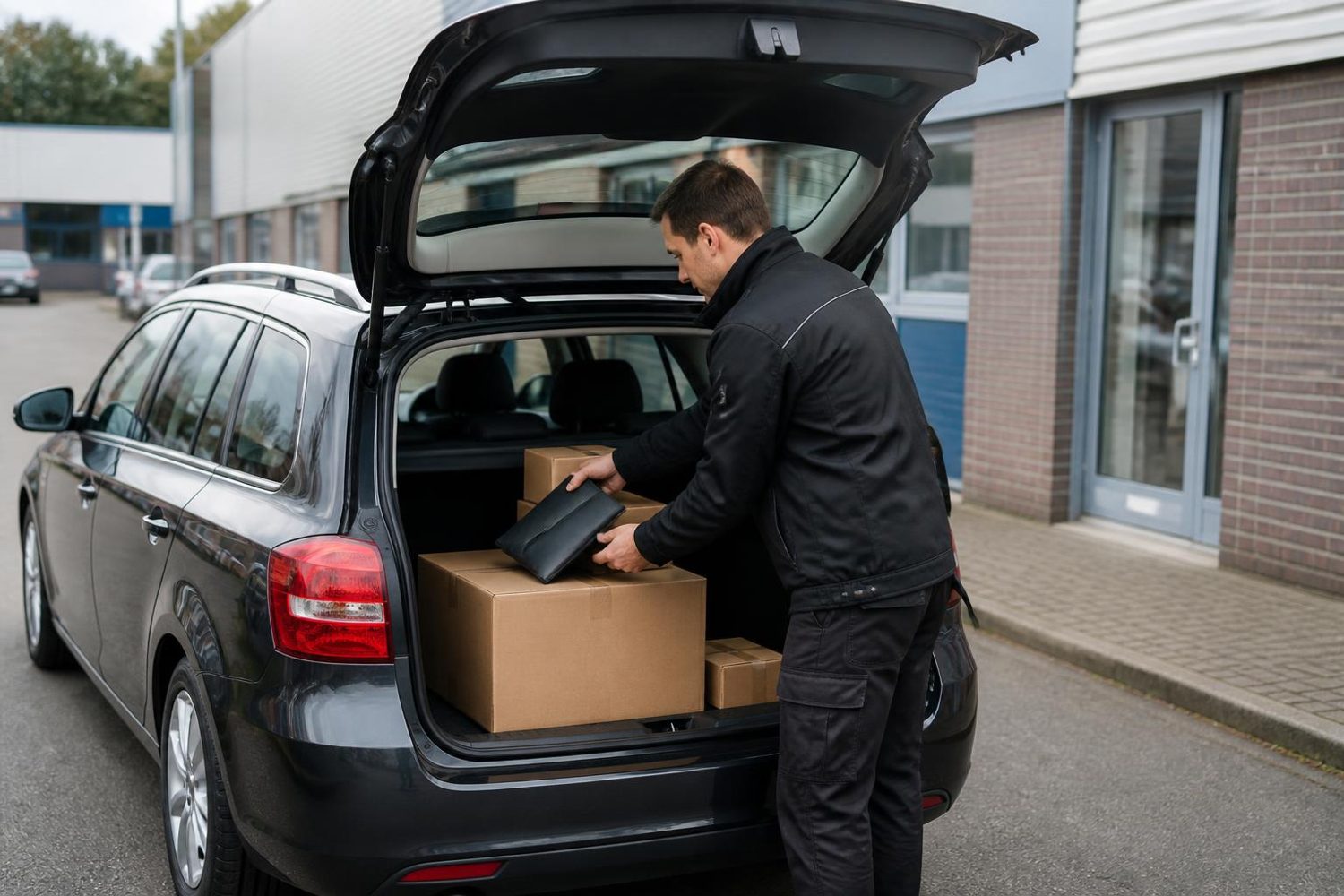
Self-employed car courier insurance covers a sole trader's own car for both personal driving and paid courier work, usually by adding hire and reward or courier use to the policy. Because you are your own business, there is no employer fleet policy to fall back on. The cover, any extras and the paperwork behind them are all your responsibility.
- Specialist brokersCourier insurance brokers who arrange hire and reward cover every day.
- One short formTell us about the vehicle, the work and the drivers once.
- No obligationCompare the options you are offered and decide in your own time.
At a glance
- Sole traders using their own car for paid deliveries usually need courier or hire and reward use added.
- One policy can cover family driving and courier work, provided both are declared.
- Working for several clients or apps is common, and some insurers ask you to name them.
- Good records of mileage, clients and claims make renewals and claims smoother.
- Add-ons such as a courtesy car, legal expenses and breakdown matter more when the car is your income.
- Goods in transit and public liability are separate covers that direct clients often ask about.
One car, two lives: family driving and paid courier work
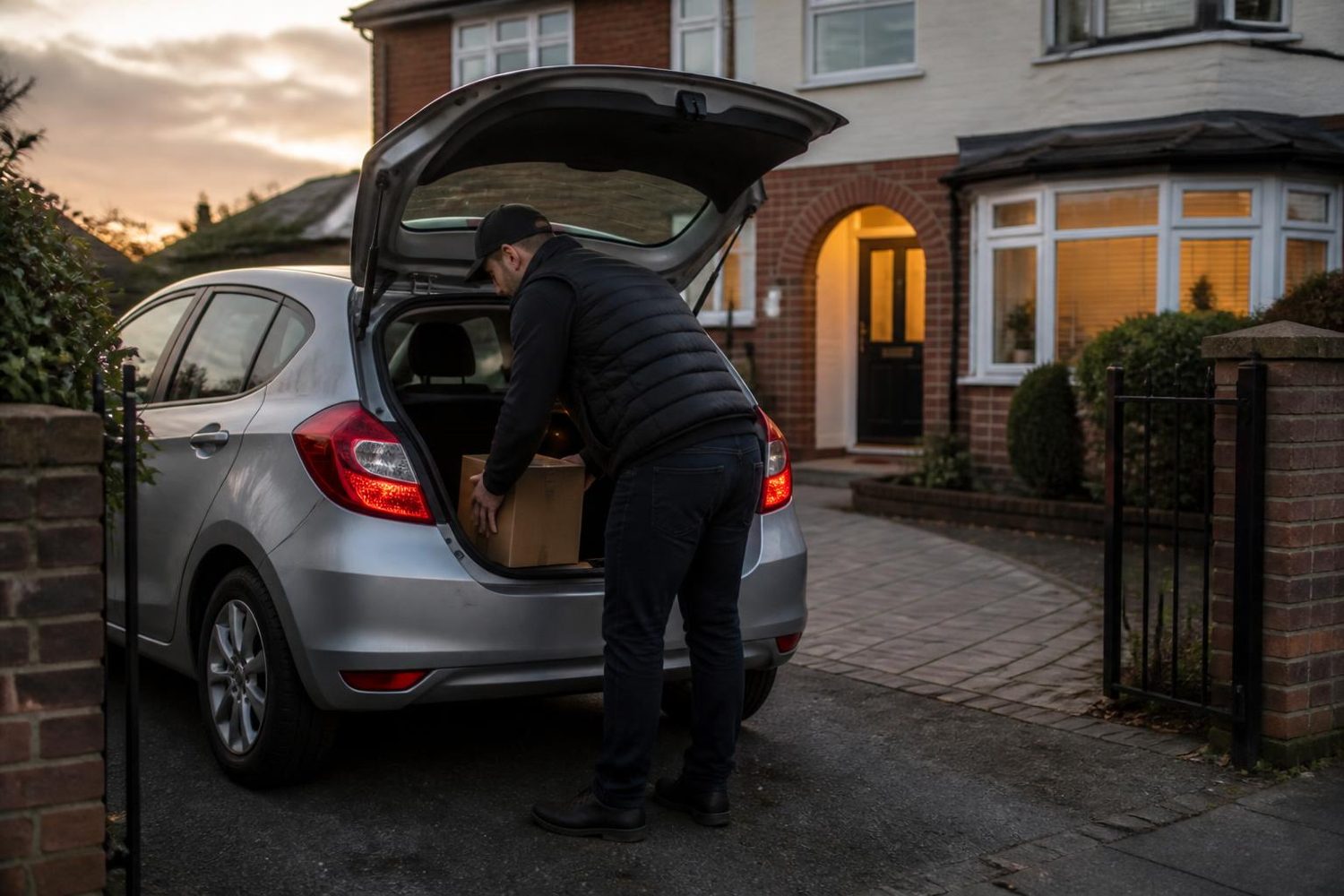
Most self-employed car couriers do not have a separate work vehicle. The same car takes the children to school, does the weekly shop and then spends the afternoon on a delivery round. The policy needs to cover all of that without gaps.
Insurers handle this by adding courier or hire and reward use alongside social, domestic and pleasure cover. It is worth being clear about how the miles split between personal and work driving, as this shapes the quote and helps avoid problems if you ever need to claim.
Other family members driving the car
If a partner uses the car for personal trips, they can usually be added as a named driver. Whether they are also covered for courier work is a separate question for the insurer.
Commuting to a depot or client
Driving to a collection point is often treated differently from the delivery itself. Checking that the policy covers the full working day avoids surprises.
Juggling several clients without confusing your insurer
Being self-employed often means spreading work across several sources: a delivery app on weekday evenings, a regular contract with a local business, and occasional same-day jobs found through word of mouth. Each brings slightly different risks.
Some insurers are happy with a general courier use description, while others want to know each company you work for. If the mix changes, such as adding a new app or taking on higher-value items, it is worth telling the broker so the policy keeps up.
Details insurers may ask about:
- Which apps, networks or direct clients you deliver for
- Whether you carry parcels, documents, food or a mix
- Typical number of drops and journey lengths
- Any items that are high value or need special handling
Keeping records that help at renewal and claim time
As a sole trader you likely already keep records for your tax return. A few extra habits can also help with insurance, particularly if there is ever a dispute about what you were doing at the time of an accident.
Clear records make it easier to give accurate mileage, show a clean history at renewal and support any claim with evidence.
- Mileage logs that separate personal and work driving
- A list of clients and the dates you started working with each
- Copies of your certificate and schedule, and any proof clients have asked for
- Dashcam footage or photos after any incident
Add-ons that protect your income, not just the car
When the car is off the road, a self-employed courier usually stops earning. That changes how useful some optional extras are compared with a private motorist's policy.
Not every add-on suits every driver, and some insurers include a few as standard. Comparing what is included across quotes gives a fairer picture than looking at the headline price alone.
Courtesy or replacement car
Some policies provide a small car while yours is repaired, but it may not be covered for courier use. It is worth checking whether a replacement can be used for work.
Legal expenses
This can help recover uninsured losses such as lost earnings after a non-fault accident, depending on the insurer.
Breakdown cover
Some breakdown policies exclude commercial use, so checking the terms covers you during a round.
Cover beyond the car that clients may expect
Direct clients sometimes ask self-employed couriers for proof of insurance before handing over goods. Motor cover alone does not usually satisfy that request.
Goods in transit protects the items you carry against loss, theft or damage, subject to conditions. Public liability covers injury or property damage you cause while out of the car, such as knocking over a display at a customer's premises. If you ever take on help, employer's liability becomes a separate question too.
Questions worth asking before you buy self-employed car courier insurance
These questions help a sole trader make sure the policy covers both sides of how the car is used.
- Does the policy cover personal driving and courier work together?Gaps between personal and work cover are a common source of refused claims.
- Do I need to name every client or app I deliver for?Some insurers ask for this and others accept a general description.
- Is a named driver covered for courier work or only personal use?Family members are often added for personal driving only.
- Can a courtesy car be used for deliveries?Many replacement cars are for personal use only.
- Does breakdown cover include commercial use?Some breakdown terms exclude vehicles used for deliveries.
- Is goods in transit or public liability available through the same broker?Keeping covers together can make proof for clients simpler.
- How do I report a change in clients or mileage mid-term?Changes in work pattern can affect whether the policy still fits.
Self-employed car courier insurance questions
Do self-employed couriers need special car insurance?
If you use your own car to carry goods for payment, standard cover usually does not apply. Most self-employed couriers need courier or hire and reward use added to their policy. A broker can help find insurers that accept your type of work.
Can I use my personal car for self-employed courier work?
Yes, many couriers do, as long as the policy includes courier or hire and reward use. Some insurers also ask about the clients you work for and the mileage split between personal and work driving.
Can my partner drive my car if I use it for courier work?
They can usually be added as a named driver for personal use. If they will also make deliveries, it is worth asking whether the insurer will cover them for courier use too, as this is not automatic.
Is self-employed courier car insurance a business expense?
Many sole traders treat the work share of their vehicle costs as a business expense. How this works for your tax return is a question for an accountant or HMRC guidance rather than an insurer.
What add-ons are worth considering for a self-employed car courier?
Drivers often look at a courtesy car that can be used for work, legal expenses to recover lost earnings, breakdown cover that includes commercial use and a protected no claims bonus. Which ones matter depends on how much you rely on the car.
Do I need public liability as a self-employed car courier?
It is not part of motor cover and is not always required, but some clients ask for it. It covers injury or damage you cause to third parties while working away from the car. A broker can explain whether it fits your work.
Ready to compare self-employed car courier insurance?
One form, specialist brokers, no obligation.